Sew Creative: Why a Sewing Planner Journal KDP is Your Best Project Partner
There’s a unique kind of chaos that comes with a creative passion. For anyone who sews, quilts, or crafts, it often looks like this: a tote bag overflowing with fabric scraps, a desk scattered with pattern pieces, and a mind buzzing with half-formed ideas for the next project. You know the feeling. You start a new dress, a quilt for a friend, or a set of custom curtains, and somewhere between the initial inspiration and the final stitch, crucial details get lost. What was that perfect thread color? How much fabric did you actually need? Where did you put that alteration note?
This is where a dedicated system stops being a luxury and becomes a necessity. The Sewing Planner Journal KDP isn't just another notebook; it's a structured framework designed specifically for the maker's workflow. It transforms scattered thoughts and physical materials into an organized, tangible record of your creative process. Think of it as the design assets folder for your physical projects, bringing the same level of intention and clarity to your sewing that a brand strategist brings to a company's brand identity.
More Than a Notebook: The Anatomy of an Organized Maker
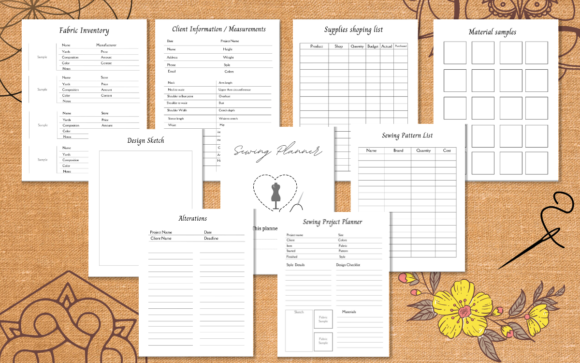
What makes this particular planner so effective? It’s built from the ground up with the sewist’s journey in mind. The package is comprehensive, offering both a ready-to-print 110-page PDF and editable PNGs via a Canva link, giving you the flexibility to use it digitally on a tablet or print it out for that satisfying hands-on experience. The 8.5 x 11-inch size is a practical choice, providing ample space without being cumbersome.
Let’s look at the core components that solve real-world problems:
- Client Information & Measurements: For those who sew for others, this page is a game-changer. It’s a professional touch that ensures accuracy and saves you from digging through old messages for that one crucial measurement. It elevates your craft from a hobby to a service.
- Fabric Inventory & Material Samples: This is where your physical studio meets digital organization. By attaching swatches and noting yardage, you create a visual library of your resources. It prevents duplicate purchases and sparks new ideas when you can see all your materials at a glance.
- Design Sketch & Sewing Project Planner: Here’s where the vision takes shape. The sketch page allows for free-form ideation, while the project planner breaks down the construction into manageable steps. It’s the difference between a vague idea and a clear, actionable plan, much like a well-structured editorial design layout guides a reader’s eye.
- Supplies Shopping List & Alterations Log: These pages are the unsung heroes of efficiency. A dedicated shopping list means you head to the store (or browse online) with purpose. The alterations log is a learning tool, helping you document what worked and what didn’t, so each project informs the next.
The personality of this planner is one of calm competence. It’s not overly decorative or distracting; its style is clean, functional, and professional. This visual hierarchy is key—it guides your eye to the right place at the right time, enhancing readability and making the system intuitive to use. It feels like a trusted assistant, quietly ensuring nothing falls through the cracks.
From Personal Hobby to Professional Practice
The applications of a system like the Sewing Planner Journal KDP extend far beyond managing a personal hobby. For the small business owner selling handmade goods on Etsy or at local markets, it becomes an essential part of your operations. Tracking client orders, managing custom measurements, and keeping an accurate inventory of materials are foundational to running a smooth, professional business. This planner provides that structure in a beautifully organized format.
For the content creator or blogger in the sewing niche, it’s a content goldmine. Documenting your process from sketch to final product using the planner’s pages creates authentic, valuable content for your audience. You can share your fabric inventory, your design sketches, and your project timelines, offering a genuine look behind the scenes. This builds trust and engagement far more effectively than any polished, finished-product shot alone.
Even for the educator or pattern designer, the principles embedded in this planner are invaluable. It encourages a methodical approach to design and construction, which is essential when creating instructions for others. The space for notes and alterations is perfect for refining techniques before they become part of a published pattern or tutorial.
Choosing the Right System for Your Creative Flow
When evaluating any organizational tool, the most important question is: does it fit how I actually work? A good system should feel like a natural extension of your process, not an added chore. The Sewing Planner Journal KDP excels here because it’s built on common stages of any sewing project: conception, planning, sourcing, execution, and reflection.
Consider these practical points when integrating it into your routine:
- Digital vs. Print: The included Canva link is a fantastic feature for those who prefer digital planning on a tablet with a stylus. It’s easy to edit, duplicate pages, and keep everything in the cloud. The PDF format is perfect for those who love the tactile experience of writing and sticking in physical fabric swatches. Many makers find a hybrid approach works best.
- Project-Specific vs. All-in-One: You might choose to dedicate one printed planner to a major project, like a wedding dress or a complex quilt, using it as a standalone project bible. Alternatively, you could use a single journal for multiple projects, sectioning them off with tabs. The planner’s structure supports both methods.
- Integration with Other Tools: This planner doesn’t exist in a vacuum. It can work alongside your favorite font for labeling (if you’re designing project tags or logos), your digital calendar for scheduling sewing time, and your physical storage system for fabrics. Think of it as the central hub that connects all these elements.
The true value of a tool like this is in the consistency it brings. Over time, your filled planners become a rich history of your work—a portfolio of your skills, a record of your growth, and a repository of hard-won knowledge. It transforms the fleeting joy of making into a lasting, organized legacy of your creativity. In a world of digital noise, there’s profound power in having a physical, well-kept record of what you’ve made with your own hands. This planner is simply the best way to keep that record beautiful, functional, and entirely your own.