Watercolor Lollipops & Sweet Design Assets
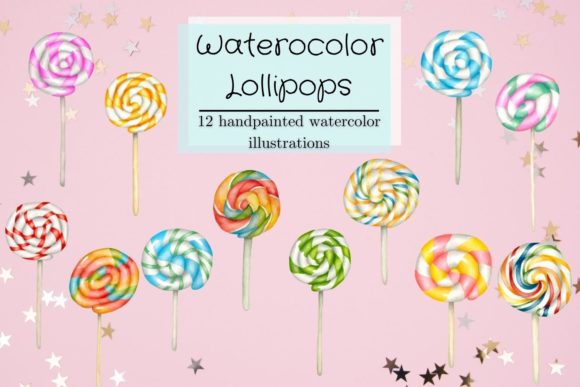
There is a distinct tactile quality to watercolor that digital art often struggles to replicate. It involves the unpredictable bleed of pigment, the texture of the paper showing through, and the soft, organic edges that give artwork life. The Watercolor Lollipops collection captures this essence perfectly. This set of Watercolor Sweets is not a generic vector trace; it is a curated collection of twelve distinct illustrations that were handpainted with full detail. Once the paint dried, the artwork was scanned in high resolution to ensure that every gradient and brushstroke remained intact. For designers and entrepreneurs, this offers the warmth of traditional art with the convenience of digital assets.
The Anatomy of the Watercolor Sweets Aesthetic
When we talk about the visual personality of these illustrations, we are discussing a style that bridges the gap between nostalgia and modern design. The Watercolor Lollipops feature rich saturation and soft, dreamy textures that feel welcoming and genuine. Unlike flat vector graphics, these sweets have depth. You can see the layers of paint where the artist built up the color to create the swirl of the candy. This "handpainted" quality is crucial in current design trends. Audiences, particularly in the 20–50 demographic, have become adept at spotting generic stock imagery. They crave authenticity.
The appeal of these Watercolor Sweets lies in their versatility. They are whimsical enough for children's products but sophisticated enough for high-end bakery branding. The style avoids the harsh lines often found in modern typography and standard graphic design, offering a softer visual hierarchy. When you place a handpainted lollipop next to a clean sans serif font, the contrast creates a dynamic focal point. The organic nature of the watercolor balances the rigidity of digital layout grids, making the overall brand identity feel more approachable and human.
Practical Applications for Creators and Entrepreneurs
As a design asset, the utility of these PNG files extends far beyond simple decoration. For cardmaking and stationery designers, these illustrations are ready to go. The high-quality scan ensures that when you resize the image for a greeting card front or a wedding invitation, the readability of the textures remains crisp. There is no pixelation, only beautiful, soft edges.
For those in the print on demand space, the applications are extensive. Consider the current market for drinkware. A handpainted lollipop illustration can transform a standard white mug into a charming piece of kitchen decor. Because the files are provided as PNGs, they typically come with transparent backgrounds, allowing you to layer them over any color or pattern. This is essential for packaging design and merchandise. You can combine multiple elements from the collection of twelve to create a repeating pattern for fabric or a chaotic, fun arrangement for a tote bag.
- Sticker Production: These files are optimized for sticker creation. You can arrange them on a single page within your preferred image editing software—such as Adobe Illustrator, Photoshop, or even Canva—and print them onto sticker paper. This is a low-overhead way to start a small business selling planner stickers or party favors.
- Digital Planning: The utility isn't limited to physical products. In the era of digital organization, these Watercolor Lollipops serve as excellent digital clipart. You can import them into apps like GoodNotes or Notability to decorate digital planners. This adds a layer of personalization to the digital experience that many users are willing to pay for.
- Social Media and Marketing: For marketers and bloggers, finding unique social media graphics is a constant struggle. Using these handpainted elements allows you to create Instagram posts or Pinterest pins that stand out in a feed dominated by flat, corporate aesthetics.
Integrating Organic Art into Professional Design
One of the challenges in brand strategy is maintaining professionalism while showing personality. Using Watercolor Sweets effectively requires an understanding of visual hierarchy. If you are designing a logo or a header for a website, you do not want to overwhelm the viewer. Instead, use a single lollipop illustration as an accent mark or a background element behind text.
When considering font pairing, the goal is contrast. Because the watercolor style is inherently decorative and textured, it pairs best with typefaces that are clean and structured. A geometric sans serif font or a classic serif font provides the necessary legibility for body text, while the watercolor art handles the visual heavy lifting. Avoid pairing these sweets with overly ornate script fonts or handwritten fonts, as this can result in a cluttered look where the eye doesn't know where to land.
For editorial design, such as magazine layouts or blog headers, these illustrations can break up large blocks of text. They serve as visual "palettes cleansers" that keep the reader engaged. In packaging design, the watercolor texture suggests a product that is artisanal, homemade, or crafted with care. This psychological trigger is powerful for food brands, bakeries, or confectioneries looking to justify a premium price point.
Maximizing Your Investment in Design Assets
When you acquire a set like the Watercolor Lollipops collection, you are essentially buying time. Painting these elements from scratch requires skill, expensive supplies, and a high-end scanner. By purchasing the scanned files, you bypass the production phase and move straight to the creative phase.
- Evaluate the Resolution: Before starting a project, check the dimensions of the PNG files. For print projects like movers or posters, you need high DPI (dots per inch). The description of these assets notes they are scanned with high quality, making them suitable for large-format printing.
- Color Management: Watercolor scans often contain subtle background tones. Ensure your software is set to the correct color profile (CMYK for print, RGB for digital) to maintain the vibrancy of the pinks, blues, and yellows in the sweets.
- Commercial Licensing: Since the prompt mentions using these for print on demand and commercial products, always verify the license. A standard license usually covers small-batch sales, but if you plan to mass-produce a product line, ensure the terms allow for that volume. This protects your business and respects the artist's work.
Ultimately, the Watercolor Lollipops set is more than just clipart; it is a toolkit for adding warmth to digital spaces. Whether you are a small business owner designing your first product line, a marketer creating a campaign for a bakery, or a hobbyist making planner stickers, these assets provide a professional, authentic look. The combination of high-quality scanning and the inherent charm of handpainted art ensures that your projects will look polished and unique.
Thank you for visiting and considering these assets. Your support allows for the continued creation of high-quality, handpainted design resources. Join the newsletter at Aneta Design Store to receive weekly freebies and stay updated on new collections.