Rediscovering Whimsy: The Timeless Appeal of Vintage Sheep Illustration
There is a distinct warmth that comes from artwork rooted in history, a quality that digital precision often struggles to replicate. The Vintage Sheep Illustration captures this essence perfectly, offering a piece of design that feels authentic and hand-crafted. This isn't just a simple graphic; it is a carefully restored piece of art sourced from a classic Polish children’s book. For designers, crafters, and brand strategists, understanding the nuances of this asset can unlock new creative possibilities, bridging the gap between modern utility and nostalgic charm.
Anatomy of a Classic: Understanding the Visual Language
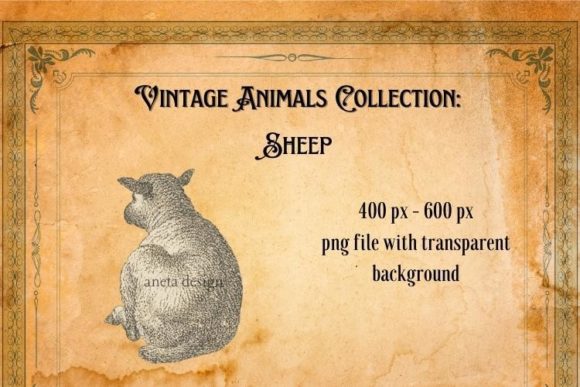
When you look at this specific Vintage Sheep Illustration, you are not seeing a modern vector trace. You are looking at the texture and grain of original print history. The style relies heavily on line work typical of mid-century book illustrations—likely woodcut or lithograph techniques—where shading is achieved through cross-hatching rather than digital gradients. This gives the sheep a tactile quality, making it feel grounded and real.
The personality of this design asset is undeniably pastoral and gentle. It evokes a sense of comfort, innocence, and tradition. Unlike the sharp, sterile edges of modern sans serif iconography, this illustration has "breathing room." The lines vary in thickness, and the edges are slightly softened by the original printing process. This organic irregularity is its greatest strength. It suggests a human hand was involved in its creation, which is a powerful psychological trigger for audiences seeking authenticity in a digital-first world. For a brand identity that aims to be approachable, earthy, or artisanal, this visual language speaks volumes before a single word is read.
Strategic Applications: Where Nostalgia Meets Modern Design
While the description mentions it is perfect for teacher gifts, the utility of a high-quality Vintage Sheep Illustration extends far beyond mugs and t-shirts. In the realm of editorial design, this asset can serve as a charming spot illustration in a magazine layout or a chapter opener for a cookbook focusing on farm-to-table recipes. Its transparent background and 300dpi resolution mean it sits comfortably on top of textured paper backgrounds without looking pasted on.
For packaging design, particularly in the organic food, wool, or skincare industries, this illustration offers immediate shelf appeal. It communicates "natural" and "pure" without using a single word of copy. Imagine this sheep on a kraft paper label for artisanal cheese or a linen bag for lavender; it anchors the product in a tradition of quality.
Digital applications are equally robust. In web design, distinct imagery helps break up text-heavy pages. This illustration can add personality to an "About Us" page or a blog header for a parenting site. On social media graphics, unique vintage assets stop the scroll. Because it is not a generic stock image, it helps content stand out in a sea of uniformity. It can be used as a watermark, a background element with reduced opacity, or a bold focal point in a collage.
The Typography Connection: Pairing and Hierarchy
Integrating a Vintage Sheep Illustration with typography requires a thoughtful approach to visual hierarchy. The illustration has a distinct style, so your font choices should complement, not compete. A common mistake is pairing vintage art with overly futuristic fonts, which creates visual dissonance.
Instead, consider using a serif font with a bit of character. A slightly condensed serif or a transitional style can echo the traditional feel of the illustration without looking dated. Alternatively, a clean handwritten font or script font can enhance the whimsical, storybook nature of the sheep, perfect for greeting cards or nursery art prints.
However, balance is key. If the sheep is the hero of the design, your typography needs to be the supporting actor. Use a sans serif font for smaller body text to ensure readability and create a modern typography contrast that keeps the design from feeling like a history book replica. This juxtaposition—vintage art with modern text—is a staple in contemporary logo design and branding. It signals a brand that respects its roots but operates in the present. This font pairing strategy ensures your layout feels curated and professional.
Practical Implementation and Quality Control
Before incorporating this or any premium font or asset into a commercial project, a rigorous evaluation process is necessary. The first step is assessing the technical specifications. This Vintage Sheep Illustration is provided as a PNG with a transparent background. This is ideal for layering, but you must ensure the resolution matches your output needs. At 300dpi, it is print-ready, but for large-scale signage, you should test the pixelation limits.
Next, consider the commercial licensing. Even if an asset is affordable or free, understanding the usage rights is a hallmark of a professional creative. Can you use it on products for resale? Can you modify it? These details protect your business and your clients.
When evaluating fit, look at the "color" of the illustration. Even in black and white, illustrations have weight and density. Does the line work of the sheep get lost against your background? You may need to adjust the contrast or invert the colors for dark mode designs. Testing is not just about placement; it is about integration. Does the sheep draw the eye away from the call to action? In web design, user experience dictates that imagery should guide the user, not distract them.
Finally, think about consistency. If you use this sheep in a campaign, can you find other assets from the same era or book to create a cohesive suite? Using a single vintage element can look like an afterthought. Using a set of them builds a brand identity. This asset is a starting point—a high-quality seed from which a broader, charming visual system can grow.